Central heating chemicals cover the full clean-protect-maintain cycle for domestic and light commercial heating systems: system cleansers that remove flux residue, magnetite sludge and limescale deposits, corrosion inhibitors that provide long-term protection once a system is clean, and specialist treatments for noisy systems, leaks and solar or heat pump circuits. Correct chemical treatment is one of the most cost-effective ways to protect boiler warranties, prevent pin-holing, and maintain efficient heat transfer across radiators and heat exchangers. This category is built around the Sentinel range, with further trusted brands to follow.
New system commissioning
Systems up to six months old still contain flux residue, jointing compound and installation debris from soldering and pipework. Left untreated, this residue accelerates corrosion and copper deposition on heat exchangers. Sentinel X300 is formulated specifically for this pre-commissioning stage, flushing out flux and swarf before the system is dosed with a long-term inhibitor. Skipping this step on a new install is one of the most common causes of early boiler warranty claims relating to internal corrosion.
Existing system cleaning and sludge removal
Older systems accumulate magnetite (black iron oxide sludge) that restricts flow, causes cold spots on radiators, and forces pumps and boilers to work harder — increasing fuel consumption and noise. Sentinel X400 is the standard rapid-clean treatment for existing systems, breaking down and dispersing sludge ahead of a power flush or drain-down. For heavily fouled systems, Sentinel X800 is a heavy-duty formulation designed for use with power flushing equipment, giving faster results where deposits are severe or the system has never previously been treated.
Long-term corrosion protection
Once a system has been cleansed and flushed, it must be refilled with a corrosion inhibitor — this applies to both open-vented and sealed systems, including combi boiler installations. Sentinel X100 protects against limescale and corrosion in clean systems and is compatible with the full range of boiler materials, including aluminium heat exchangers common on modern condensing combis. Note that softened water is not suitable for filling a heating system unless treated with a suitable inhibitor, as it lacks the natural mineral protection of untreated mains water.
Noise reduction and leak sealing
Where a system has audible kettling or banging caused by limescale on the heat exchanger, Sentinel X200 is added alongside X100 inhibitor to reduce noise without the need for a full descale in every case. For systems suffering minor weeps at joints or seals, Sentinel leak sealer products offer a chemical alternative to remedial plumbing work on hard-to-access pipework, though this should not be treated as a substitute for repairing a known mechanical fault.
Solar thermal and heat pump systems
Beyond conventional gas and LPG central heating, the range extends to Sentinel R100 solar thermal fluid, R200 solar system cleaner, and dedicated heat pump fluids (R500, R600) and flushing products (R800) for ground and air source installations — reflecting the wider mix of heat sources now common across UK domestic properties.
Specifying the right treatment
-
New system (under 6 months): X300 cleanser, followed by X100 inhibitor
-
Existing system, general maintenance: X400 cleanser, followed by X100 inhibitor
-
Heavily sludged system / power flush: X800 cleanser
-
Noisy boiler or heat exchanger: X200 alongside X100
-
Softened water systems: inhibitor treatment is mandatory, not optional
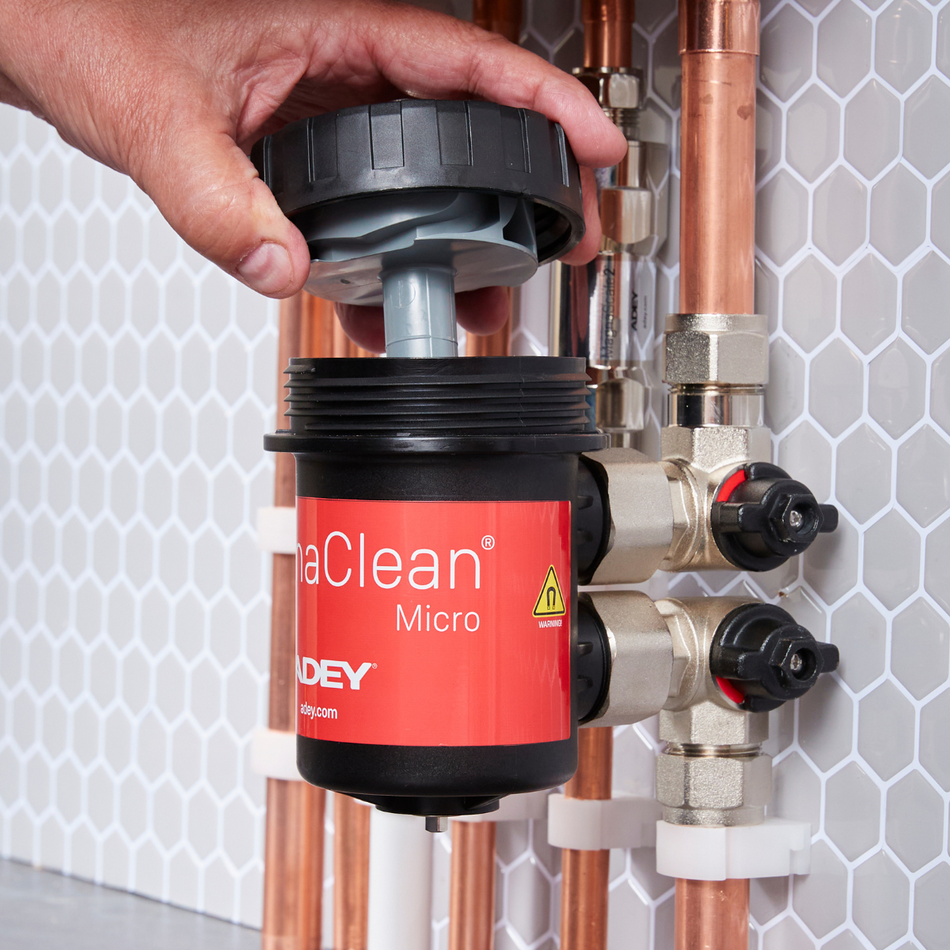
For maximum protection, cleaning and inhibitor chemicals are best combined with a magnetic filter to capture debris on an ongoing basis — see our [Magnetic Filters] collection. Systems showing persistent sludge despite chemical treatment may also benefit from a full [Power Flushing Equipment] setup, and hard water areas should be cross-referenced with our [Scale Inhibitors] range for whole-system limescale prevention.


 Sentinel X100T-QT-GBIn stock