


8.03kWh
New high-capacity battery module
96kWh
Max storage on one 3-phase inverter
IP66
Indoor or outdoor installation
15 yrs
Inverter warranty
EcoFlow's second-generation home battery system has landed. The EcoFlow Ocean 2 (you'll also see it called PowerOcean 2) is a stackable hybrid inverter and LFP battery system that bolts together in layers: base on the floor, batteries on the base, inverter on top. No battery cabinets, no loose cable looms between modules.
This guide covers everything you need to put a working system together: which inverter to choose, the 5kWh and new 8kWh batteries, how many you can stack, when to floor-mount or wall-mount, what changes on a three-phase supply, and the small parts (meters, bases, junction boxes) that are easy to forget at checkout. If you already own a first-generation PowerOcean, there's good news for you too.
Ocean 2 is designed to grow with you: start with one battery today and add more later without replacing anything you already own.
What's new in Ocean 2
Three inverter options
Two single-phase products: Ocean 2 for 3.68kW, 5kW and 6kW homes, and Ocean 2 Plus at 8kW, 10kW or 12kW with three MPPTs, 63A whole-home backup and room for 12 batteries. Plus an 8/10/12kW three-phase model.
A bigger 8kWh battery
The new 8.03kWh module (7.76kWh usable) sits alongside the 5.02kWh module. Same footprint, more storage per layer, and up to 6.4kW short-term discharge.
Cable-free stacking
The floor base has a click-on stacking terminal and a built-in spirit level. Batteries lock onto each other without external cables, and the inverter sits on top.
Works with Gen 1 batteries
Ocean 2 inverters are cross-compatible with original PowerOcean LFP batteries, so existing owners can upgrade without scrapping storage they've already paid for.
Can you mix Ocean 2 with Gen 1 PowerOcean?
Yes. This is one of the biggest reasons to choose Ocean 2 if you already run an original EcoFlow PowerOcean system. The Ocean 2 inverter accepts first-generation PowerOcean LFP batteries, and the Ocean 2 5.02kWh battery is cross-compatible with the PowerOcean 5kWh battery. That means you can keep your existing modules, add new ones and run them as one system.
There are three rules to follow when you mix generations:
- Maximum four batteries in a mixed stack. The normal six-battery limit drops to four as soon as Gen 1 and Gen 2 modules share a stack. This applies on both single-phase and three-phase systems.
- Gen 1 batteries go at the bottom. Place your PowerOcean batteries first, then the Ocean 2 batteries on top.
- Use the PowerOcean (Gen 1) floor base, not the Ocean 2 base. The Ocean 2 floor base is only recommended for stacks made entirely of Ocean 2 batteries.
Upgrade path for Gen 1 owners: keep your PowerOcean 5kWh batteries on their original base, fit a new Ocean 2 inverter, and top the stack up with Ocean 2 5.02kWh modules until you reach four batteries. If you need more than four, start a second all-Ocean 2 stack. Not sure what you have? Send us a photo of your rating labels and we'll check.
Step 1: choose your inverter
There are two separate single-phase products, each with its own price: the Ocean 2 (3.68kW, 5kW or 6kW, from £1,100) and the higher-output Ocean 2 Plus (8kW, 10kW or 12kW, from £1,900). Your inverter sets your power output, how much solar you can connect and how many batteries the system can hold. Both single-phase models are IP66, can be floor-stood on a battery stack or wall-mounted, carry a 15-year warranty and need a separate external smart meter for commissioning in most UK homes.
| Feature | Ocean 2 (1ph) | Ocean 2 Plus (1ph) |
|---|---|---|
| AC output | 3.68kW / 5kW / 6kW | 8kW / 10kW / 12kW |
| MPP trackers | 2 | 3 |
| Max PV input | Up to 12kW | 16kW / 20kW / 24kW |
| Max batteries | 6 (one stack) | 12 (two stacks) |
| Max storage (5kWh modules) | 30.12kWh | 60kWh |
| Backup | Standard backup | Whole-home, 63A bypass, 0ms switching* |
| Parallel systems | Single inverter | Up to 5 on-grid (300kWh) |
| Grid connection | G98 (3.68kW) / G99 (5–6kW) | G99 |
| Weight | Approx. 21.5kg | Approx. 36.5kg |
| Price | From £1,100 | From £1,900 |
*Under supported grid conditions.
Quick rule of thumb: most UK homes with a standard solar array and one or two batteries are well served by the Ocean 2 at 3.68kW, which typically keeps you on a simple G98 notification. Go for Ocean 2 Plus if you have an EV, a heat pump, a large or multi-orientation roof, or you want the whole house to stay on during a power cut.
See Ocean 2 Plus in action
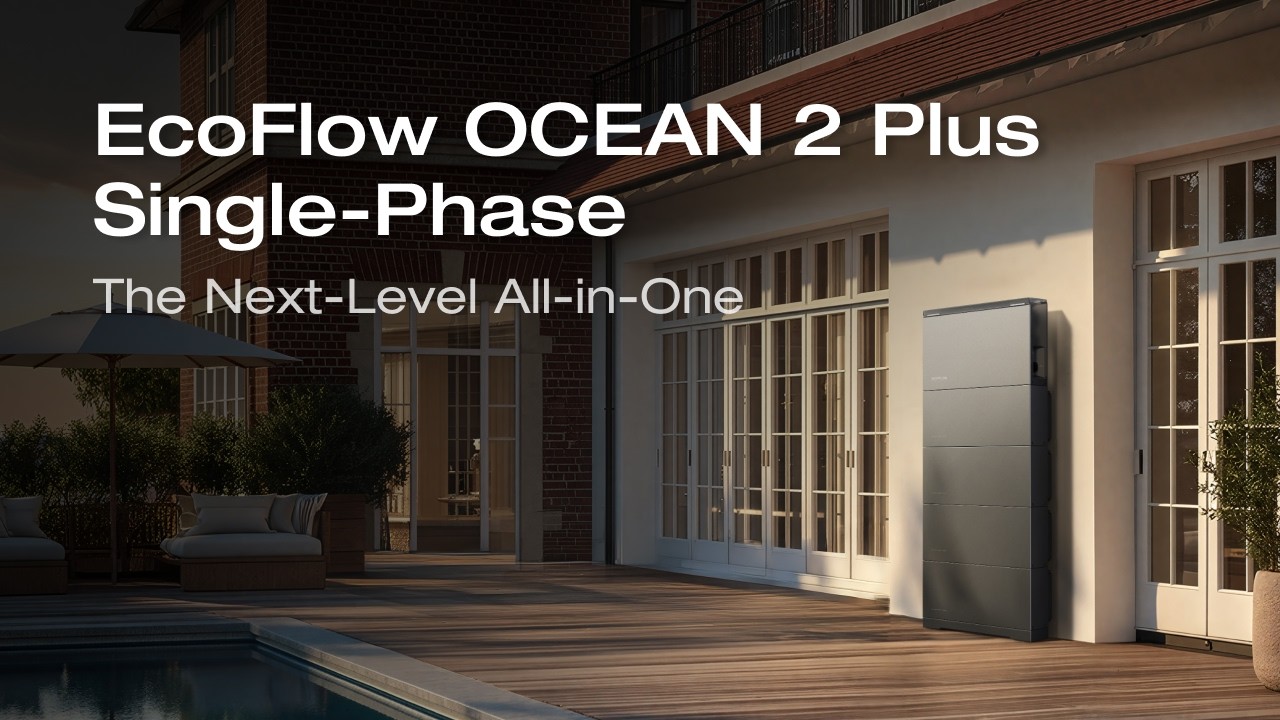
EcoFlow OCEAN 2 Plus Single-Phase: the next-level all-in-one. Watch on YouTube
Step 2: choose your batteries
Both Ocean 2 batteries are LiFePO4, IP66-rated for outdoor use and share the same 680 × 196mm footprint, so you can stack 5kWh and 8kWh modules together on the same Ocean 2 base. The 5kWh is the shorter, naturally cooled module; the 8kWh is taller with intelligent air cooling and more power per layer.
| Specification | Ocean 2 5.02kWh (EF BD-5-S2) | Ocean 2 8kWh (EF BD-8-S2) |
|---|---|---|
| Nominal capacity | 5.02kWh | 8.03kWh |
| Usable capacity* | 4.87kWh | 7.76kWh |
| Nominal charge power | 2.5kW | 4.1kW |
| Nominal discharge power | 3.4kW | 4.1kW |
| Max discharge (short-term) | 4.08kW (up to 20 min) | 6.4kW (up to 30 min) |
| Dimensions (W × D × H) | 680 × 196 × 279mm | 680 × 196 × 378mm |
| Weight | 46kg | 67.5kg |
| Cooling | Natural cooling | Intelligent air cooling |
| Max per stack | 6 floor / 3 wall | 6 floor / 3 wall |
| Max usable per floor stack | 29.22kWh | 46.56kWh |
| Price | £1,900 | £2,100 |
| Cost per usable kWh | approx. £390 | approx. £271 |
*Usable capacity per EcoFlow datasheet: 100% depth of discharge, 0.2C charge and discharge at 25°C, beginning of life.
On a cost-per-usable-kWh basis the 8kWh module is the clear winner, at roughly £271 against about £390 for the 5kWh. The 5kWh module still earns its place when you're matching an existing Gen 1 stack, when headroom is tight (it's 99mm shorter), or when you want to keep weight down on a wall-mounted install.
Mix and match: EcoFlow's Ocean 2 datasheet shows 8kWh, 5kWh and Gen 1 PowerOcean batteries in the same stack. Ocean 2 supports mixed use of Gen 1 and Gen 2 battery packs within one system, so you're never locked into one size.
Step 3: floor stack, wall mount or dual tower?
How you mount the system decides how many batteries you can fit and which base you need. Here is every configuration in one place.
| Configuration | Max batteries | 5kWh modules | 8kWh modules | Base you need |
|---|---|---|---|---|
| Floor stack (all Ocean 2) | 6 | 30.12kWh | 48.18kWh | Ocean 2 Battery Floor Base |
| Wall-mounted stack | 3 | 15.06kWh | 24.09kWh | EcoFlow wall-mounted battery base |
| Mixed Gen 1 + Gen 2 stack | 4 | Any Ocean 2 size with PowerOcean, Gen 1 at the bottom | PowerOcean (Gen 1) floor base | |
| Ocean 2 Plus dual tower | 12 (2 × 6) | 60kWh | Ask us to confirm | Ocean 2 base + PowerOcean Plus base and junction box for stack two |
| Three-phase (Ocean 2 3ph) | 12 (2 × 6; 4 per stack if mixed) | 60.24kWh | 96.36kWh | 3ph Battery Junction Box & Floor Base |
Floor stack
The default and the most flexible. The Ocean 2 floor base has adjustable feet and a spirit level, bolts down with M6×60 expansion bolts (two come with each battery) and takes up to six batteries with the inverter on top. Bolts supplied are for solid concrete; use suitable fixings on other floors.
Wall mount
Ideal for garages and narrow side returns where floor space is tight. A wall-mounted stack is limited to three batteries and needs EcoFlow's dedicated wall-mounted battery base. The wall must be able to carry the full load, so check construction before you commit.
Dual tower (Ocean 2 Plus)
Ocean 2 Plus can run two stacks of up to six batteries each. Stack one sits on the Ocean 2 floor base; stack two connects through a PowerOcean Plus battery base and battery junction box, both sold separately.
Clearances that matter
Leave at least 300mm between parallel stacks and enough room at the sides to tighten the battery locking screws. In a corridor, hallway or lobby, keep at least 1m clear for safe exit.
The upgrade we recommend first: EcoFlow Power Insight

A battery only saves you money if it knows when to charge and when to discharge. Power Insight is the screen and brain that makes that visible. It reads grid import, export, solar generation and battery flows from CT clamps at your consumer unit, then feeds the EcoFlow app with real-time data.
- Tariff-aware scheduling for Octopus Agile, Intelligent, Flux and other time-of-use tariffs
- Zero-export and dynamic export limiting to help with G99 compliance
- Single-phase and three-phase support with selectable CT clamps
- 1-minute history and a 5-year hardware warranty
£395 inc. VAT
Build your Ocean 2 kit: the complete parts lists
Below are four tried-and-tested builds. Every kit includes the inverter, batteries, the correct base and the meter you need to commission it, so nothing is missing on install day. Prices are inc. VAT and use the starting price of each inverter range; higher-output variants cost more.
Starter: 8kWh single-phase
Typical 3-bed home with solar, simple G98 connection
- Ocean 2 1ph Inverter (3.68kW)£1,100
- 1 × Ocean 2 8kWh Battery£2,100
- Ocean 2 Battery Floor Base£210
- EcoFlow 1ph Meter£79
From £3,489
7.76kWh usable. Add batteries later, up to six on the same base.
Family: 16kWh single-phase
Bigger usage, overnight tariff shifting
- Ocean 2 1ph Inverter (from 3.68kW)£1,100
- 2 × Ocean 2 8kWh Battery£4,200
- Ocean 2 Battery Floor Base£210
- EcoFlow 1ph Meter£79
- Power Insight (recommended)£395
From £5,984
15.52kWh usable. Choose 5kW or 6kW for more output (G99).
Whole-home backup: 24kWh
EV, heat pump or power-cut protection
- Ocean 2 Plus 1ph Inverter (from 8kW)£1,900
- 3 × Ocean 2 8kWh Battery£6,300
- Ocean 2 Battery Floor Base£210
- EcoFlow 1ph Meter£79
- Power Insight (recommended)£395
From £8,884
23.28kWh usable. Room to grow on a second tower.
Gen 1 upgrade
Keep your PowerOcean batteries
- Ocean 2 1ph Inverter (from 3.68kW)£1,100
- Ocean 2 5.02kWh Battery (per module)£1,900
- PowerOcean 1ph Floor Base (if needed)£149
- EcoFlow 1ph Meter£79
From £3,228
Mixed stacks max four batteries, Gen 1 at the bottom.
Three-phase: 16kWh
Larger homes, farms and three-phase supplies
- Ocean 2 3-Phase Inverter (from 8kW)£2,770
- 2 × Ocean 2 8kWh Battery£4,200
- 3ph Battery Junction Box & Floor Base£735
- Power Insight (recommended)£395
From £8,100
15.52kWh usable. Built-in smart meter. Expand to 12 modules (96kWh).
Optional extras for any kit: the EcoFlow PowerPulse 2 7kW EV charger to put your stored solar into your car, and the EcoFlow 4G dongle with a 5-year data plan for sites where Wi-Fi doesn't reach the battery. Both are listed further down.
Ocean 2 on a three-phase supply
Larger homes, farms and small commercial buildings often have a three-phase supply. The EcoFlow Ocean 2 3-Phase Hybrid Inverter is built for exactly that, and it's the biggest system in the range: up to 12 battery modules and 96kWh of storage on a single inverter.
| Model | Rated output | Max PV input | Max output current |
|---|---|---|---|
| EF HD-P3-8K0-S2 | 8kW | 16kW | 14.3A |
| EF HD-P3-10K0-S2 | 10kW | 20kW | 17.8A |
| EF HD-P3-12K0-S2 | 12kW | 24kW | 21.4A |
Built-in meter and backup
The three-phase inverter has a built-in smart meter and 63A whole-home backup with 0ms load-side switchover, so there's no separate backup box. Three MPPTs (50–1000V) handle complex roofs, with 97.8% maximum efficiency.
Junction box and base
Three-phase stacks use the Battery Junction Box and Floor Base for 3ph Power Ocean Plus and Ocean 2. The junction box is the connection and safe isolation point between inverter and batteries. One junction box supports up to six battery packs.
How many batteries
Up to six per floor stack and 12 per inverter, mixing 5kWh and 8kWh modules. Wall-mounted, the limit is three. Mix PowerOcean and Ocean 2 batteries and a stack is limited to four.
Scale and spacing
Cascade up to five inverters on-grid (two off-grid) for larger sites. Allow 300mm either side of a stack, and at least 400mm between adjacent stacks when cascading four or more battery packs.
Monitoring: Power Insight supports three-phase with three CT clamps, one per phase. The EcoFlow 3ph Meter is available where your installer or tariff calls for a separate external meter.
How an Ocean 2 system is installed
Ocean 2 is a high-voltage DC battery system. It must be installed, wired and commissioned by a qualified electrician (MCS-certified for the inverter) to BS 7671 and EcoFlow's installation manual. Here's what the job looks like, so you know what to expect and what to ask your installer.

Ocean 2 is IP66-rated, so a stack can live on an outside wall as well as in a garage or plant room.
Survey and sizing
Your installer checks your consumption, tariff, solar array and supply (single or three-phase), then picks the inverter output and number of batteries.
DNO notification
A 3.68kW Ocean 2 typically falls under G98 notification. The 5kW and 6kW Ocean 2 and all Ocean 2 Plus models need a G99 application to your network operator before commissioning.
Choose the spot and mounting
Pick a solid, flat floor that can carry the full stack, or a wall rated for a three-battery wall mount. Plan for 300mm side clearance, 1m in corridors, and short cable runs to the consumer unit and meter.
Level and fix the base
Set the floor base level using its adjustable feet and built-in spirit level, then fix it with expansion bolts. On three-phase, fit the junction box and floor base instead.
Stack the batteries
Each battery is a two-person lift using the handles; for stacks of four or more, EcoFlow calls for lifting equipment. Batteries click onto the terminal below, with no external cables between modules, and are secured with the side locking screws.
Fit the inverter
The inverter sits on top of the stack (or on the wall). Built-in handles and captive side screws make this quicker than older cabinet-style systems.
Wire PV, AC and metering
Connect solar strings to the MPPT inputs, the AC side to the consumer unit, and install the external smart meter and CT clamps. Add Power Insight at this stage if you're using it.
Commission and connect
Power up, pair the system in the EcoFlow app over Wi-Fi (or the 4G dongle), set your tariff and backup preferences, and complete your MCS and DNO paperwork.
Shop the Ocean 2 range

EcoFlow
Ocean 2 1ph Hybrid Inverter 3.68 / 5 / 6kW
Compact all-in-one hybrid inverter with two MPPTs and up to 12kW PV input. Stacks directly on up to six batteries. Separate meter required.
From £1,100 inc. VAT
EcoFlow
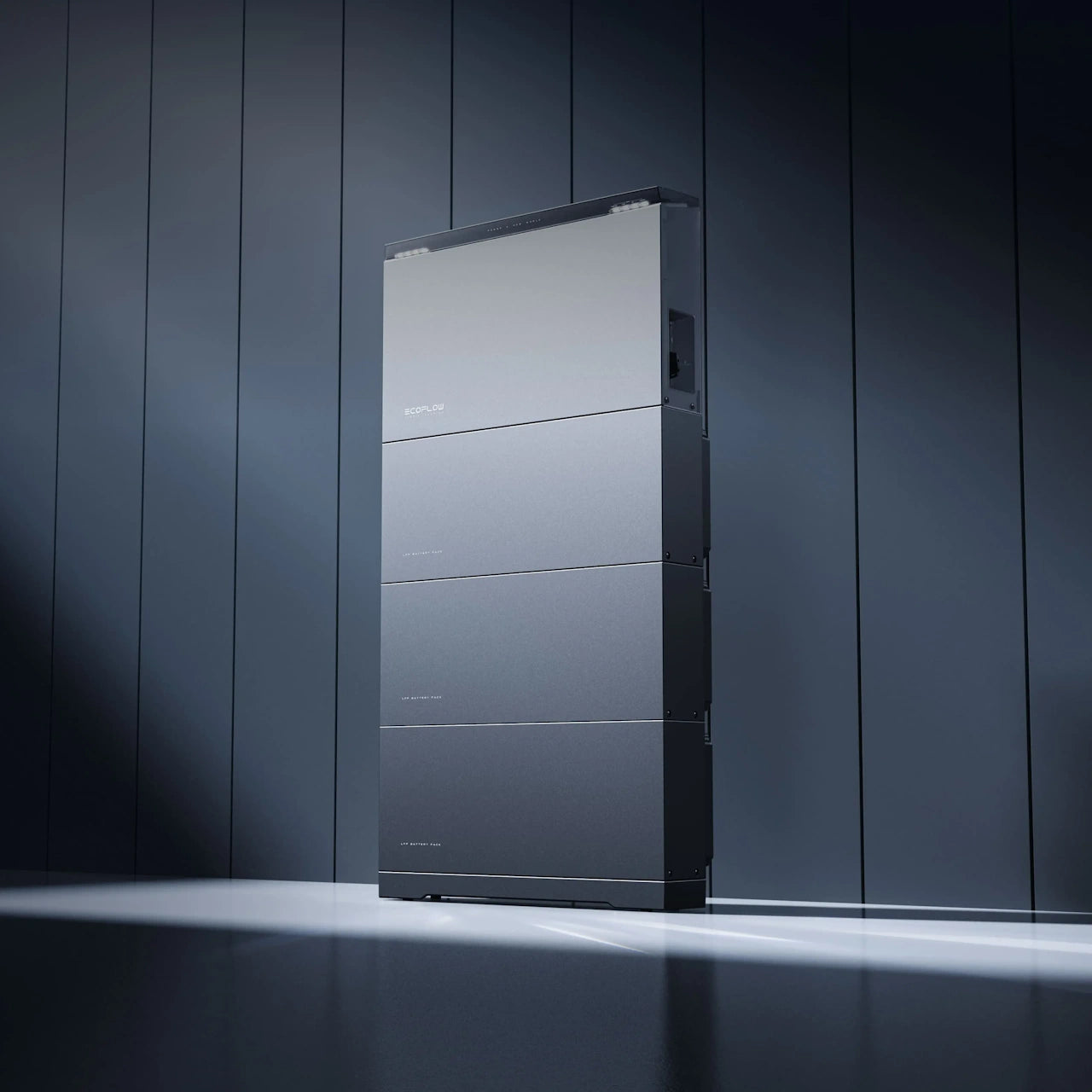
Ocean 2 Plus 1ph Hybrid Inverter 8 / 10 / 12kW
Whole-home backup with a 63A bypass, three MPPTs and up to 12 batteries (60kWh) on a dual-tower build. Parallel up to five inverters.
From £1,900 inc. VAT

EcoFlow
Ocean 2 3-Phase Hybrid Inverter 8 / 10 / 12kW
Three MPPTs, up to 24kW PV, built-in smart meter and 63A whole-home backup. Takes up to 12 batteries for 96kWh on one inverter.
From £2,770 inc. VAT

EcoFlow
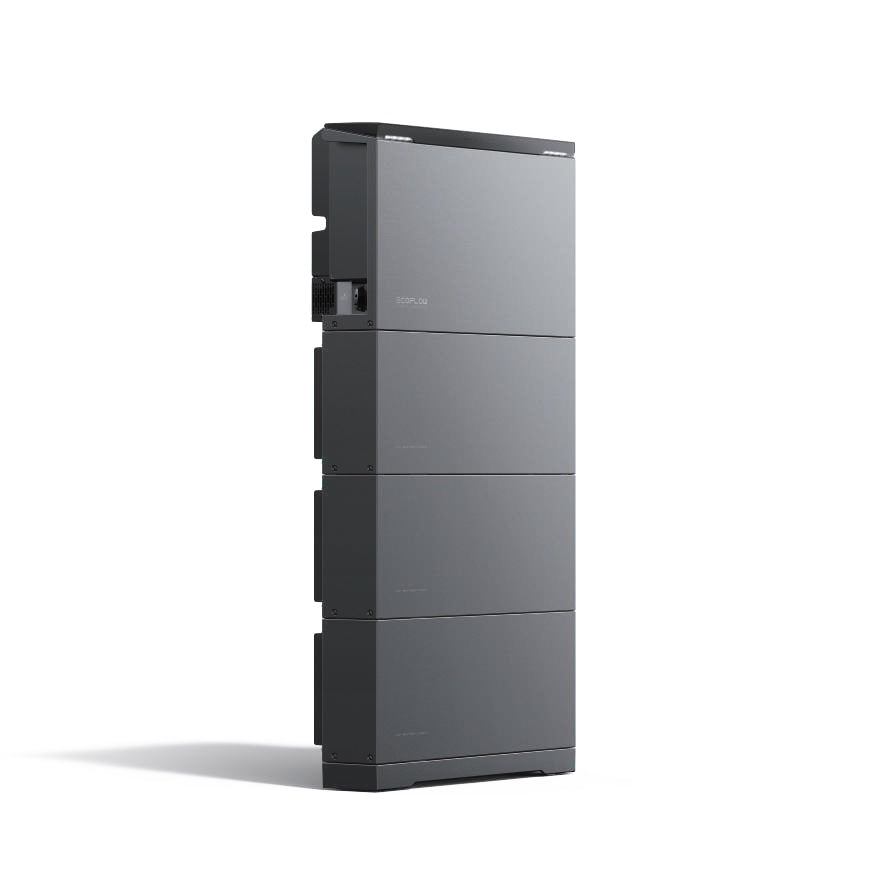
Ocean 2 8kWh LFP Battery
8.03kWh nominal, 7.76kWh usable, 6.4kW short-term discharge and up to 10,000 cell cycles. Six per floor stack, three on the wall.
£2,100 inc. VAT
EcoFlow
Ocean 2 5.02kWh LFP Battery
4.87kWh usable, 3.4kW nominal discharge. The cross-compatible module: stacks with Ocean 2 8kWh batteries and with Gen 1 PowerOcean 5kWh batteries in mixed stacks of up to four.
£1,900 inc. VAT

EcoFlow
Ocean 2 Battery Floor Base
Foundation for your first all-Ocean 2 stack. Adjustable feet, built-in spirit level and a click-on terminal for cable-free stacking.
£210 inc. VAT

EcoFlow
3ph Battery Junction Box & Floor Base
For three-phase Ocean 2, Ocean 2 Plus and PowerOcean Plus systems. Safe battery isolation plus a secure floor fixing for up to six batteries.
£735 inc. VAT
Meters, connectivity and EV charging
The smaller parts that complete the system. An external meter is needed for commissioning on nearly every UK install, so don't leave it out of your basket.
| Accessory | What it's for | Price | |
|---|---|---|---|
| EcoFlow 1ph Meter | Standard external meter for single-phase Ocean 2 and Ocean 2 Plus | £79 | View |
| EcoFlow 1ph Smart Meter with 120A CTs (MID) | MID-approved meter for tariffs that require one, such as Octopus Tenant Power | £99 | View |
| EcoFlow 3ph Meter | External meter for three-phase systems | £149 | View |
| EcoFlow 4G Dongle (5-year data) | Keeps your system online where Wi-Fi is weak or unreliable | £395 | View |
| PowerOcean 1ph Floor Base (Gen 1) | The base to use for mixed Gen 1 + Ocean 2 stacks | £149 | View |
| EcoFlow PowerPulse 2 7kW EV Charger (optional) | Untethered Type 2 charger that works within the EcoFlow ecosystem | £570 | View |
| PowerPulse 2 Type 2 Cable 7.5m | The PowerPulse 2 is untethered, so add a cable if you don't have one | £220 | View |
Ocean 2 questions, answered
Is EcoFlow Ocean 2 the same as PowerOcean 2?
Yes, Ocean 2 is EcoFlow's second-generation PowerOcean home battery system. You'll see both names used. It's sold as the Ocean 2 and Ocean 2 Plus inverters with Ocean 2 5.02kWh and 8kWh batteries.
Can I add Ocean 2 batteries to my existing PowerOcean system?
Ocean 2 inverters work with original PowerOcean LFP batteries, and the Ocean 2 5.02kWh module is cross-compatible with the PowerOcean 5kWh module. Mixed stacks are limited to four batteries, with Gen 1 batteries at the bottom on the PowerOcean base.
How much usable capacity do Ocean 2 batteries have?
The 5.02kWh module provides 4.87kWh usable and the 8.03kWh module provides 7.76kWh usable, measured at 100% depth of discharge at 25°C at beginning of life.
Is there a three-phase Ocean 2?
Yes. The Ocean 2 3-Phase Hybrid Inverter comes in 8kW, 10kW and 12kW versions, has a built-in smart meter and 63A whole-home backup, and supports up to 12 battery modules (96kWh with 8kWh batteries).
Can I mix 5kWh and 8kWh Ocean 2 batteries?
Yes. The Ocean 2 floor base supports stacks of 5kWh modules, 8kWh modules or a mix of the two, up to six batteries per stack.
How many batteries can I wall-mount?
Up to three per stack using EcoFlow's wall-mounted battery base. That's 24.09kWh with three 8kWh modules or 15.06kWh with three 5kWh modules.
Do I need a separate smart meter?
In most UK installations, yes. Both Ocean 2 and Ocean 2 Plus are supplied without an external meter. Choose the 1ph Meter, or the MID-approved 1ph Smart Meter if your tariff requires it. The three-phase Ocean 2 inverter has a built-in smart meter, with the 3ph Meter available where a separate meter is specified.
Can Ocean 2 be installed outside?
Yes. The inverters and the 8kWh battery are IP66-rated, and the battery operates from -20 to 55°C. Power may be derated above 40°C, so avoid spots that bake in direct afternoon sun.
Can I install it myself?
No. Ocean 2 is a high-voltage DC system and must be installed by a qualified, MCS-certified installer, with the correct G98 or G99 notification to your network operator. We supply the hardware and can help your installer with the parts list.
Need help sizing your Ocean 2 system?
Tell us your supply type, annual usage and solar size, and we'll send a complete, matched parts list for single-phase or three-phase, floor or wall mounted.