


One stack instead of four boxes on the wall
A typical solar-plus-storage install still means a separate inverter, a battery, an EV charger and an energy-management hub — four boxes, four lots of wiring and often four apps. The Sigenergy SigenStor puts all of that into one modular stack that you can grow over time.
This guide explains how the SigenStor works, what each module does, how big a system you actually need, and where the Sigen Energy Gateway and DC EV charger fit in. Every product mentioned is in stock in the AIZO Quality Heating Sigenergy range, with current UK prices further down the page.
The short version: SigenStor is an energy controller on top, stackable LFP battery modules underneath, an optional DC EV charger in the same stack, and a Gateway on the wall if you want the house to stay on in a power cut.

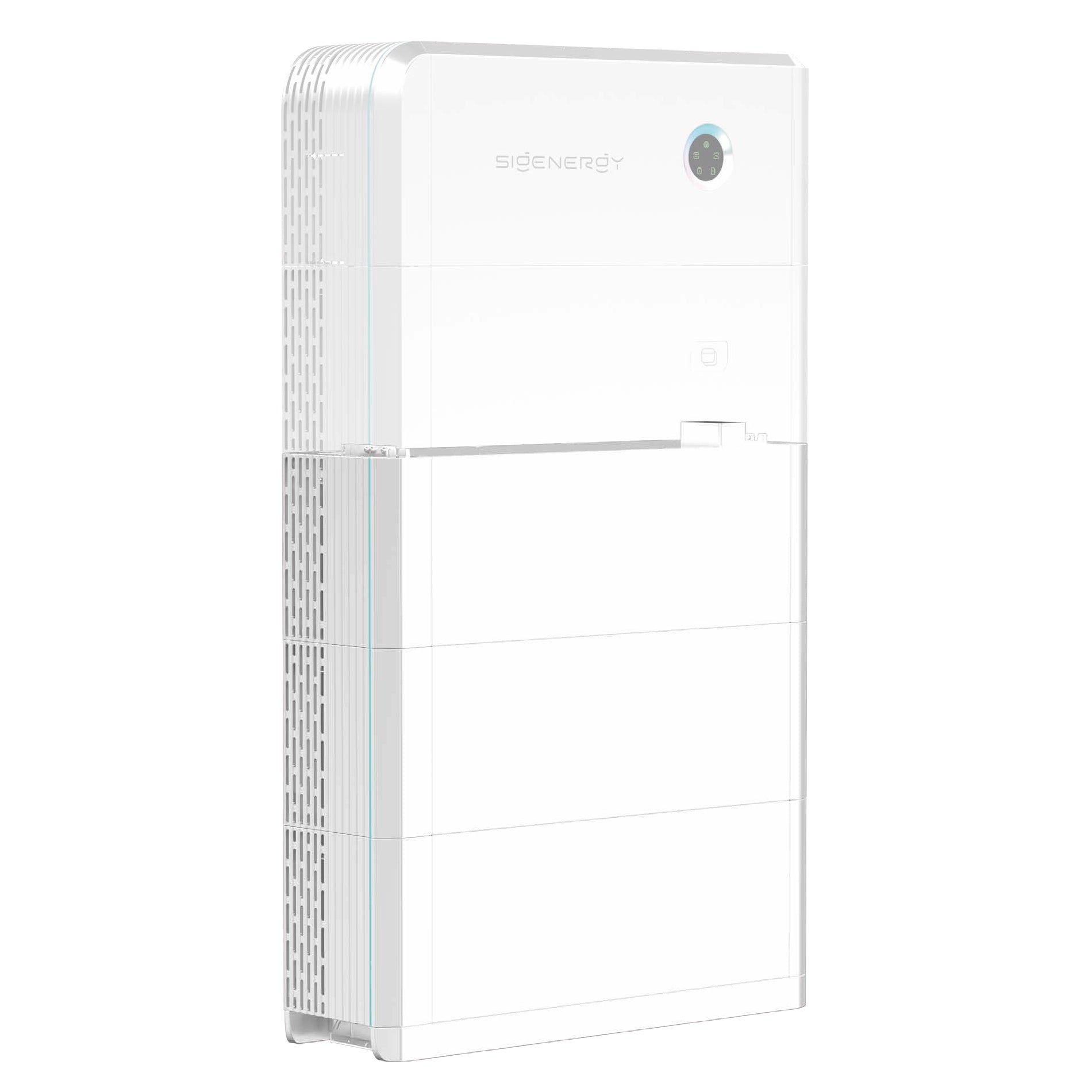
SigenStor EC 6.0 SP energy controller on a single BAT 8.0 battery module
What "5-in-1" actually means
Sigenergy designed each function to share one DC bus and one control system, rather than bolting separate products together. These are the five jobs a SigenStor stack does:
Hybrid solar inverter
Dual MPPT inputs accept up to 2× the inverter rating in PV (12 kW of panels on the 6 kW model). Single-phase controllers run from 3.6 to 12 kW; three-phase from 10 to 25 kW.
Battery power conversion (PCS)
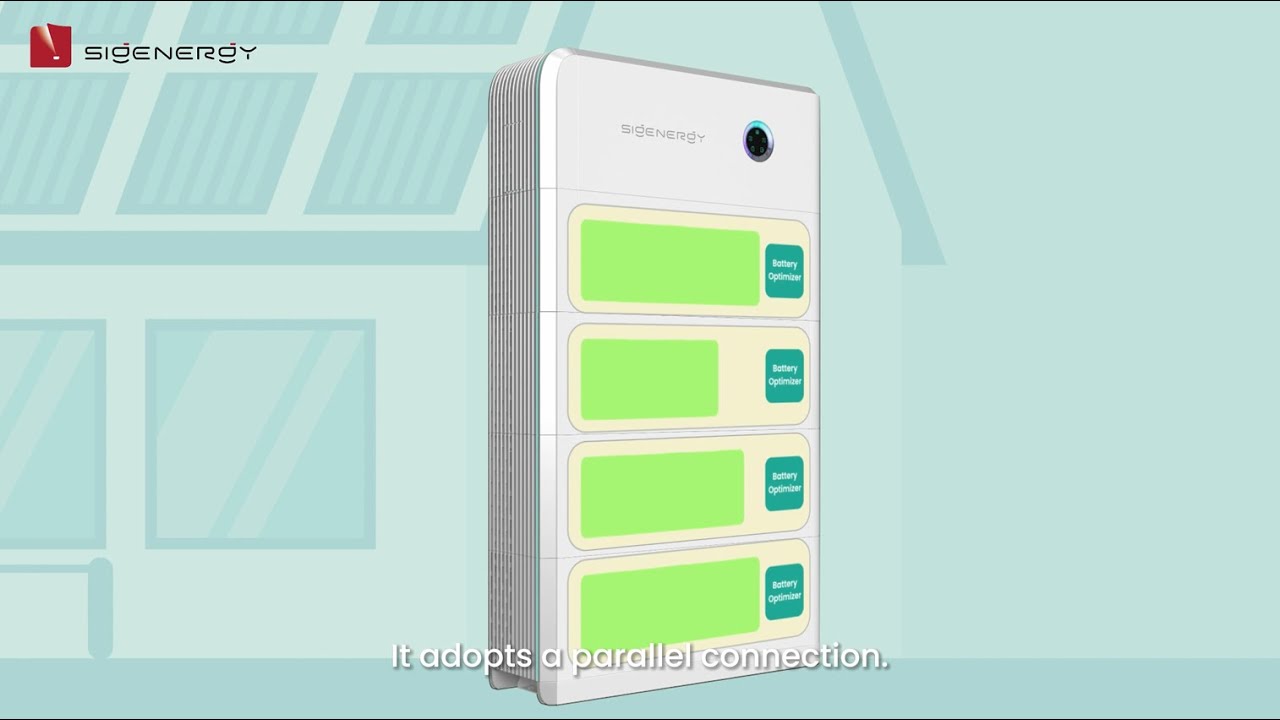
Built into each battery module, so every module is optimised individually. That is why you can mix module sizes and add new ones years later.
LFP battery packs
Stack one to six modules under a controller. A BAT 8.0 gives 8.06 kWh (7.8 kWh usable); six of them reach 48 kWh on one single-phase controller.
Energy management (EMS)
The mySigen app decides when to charge, discharge, export or hold — including scheduling around Octopus Agile, Go and Economy 7 rates.
Optional DC EV charger
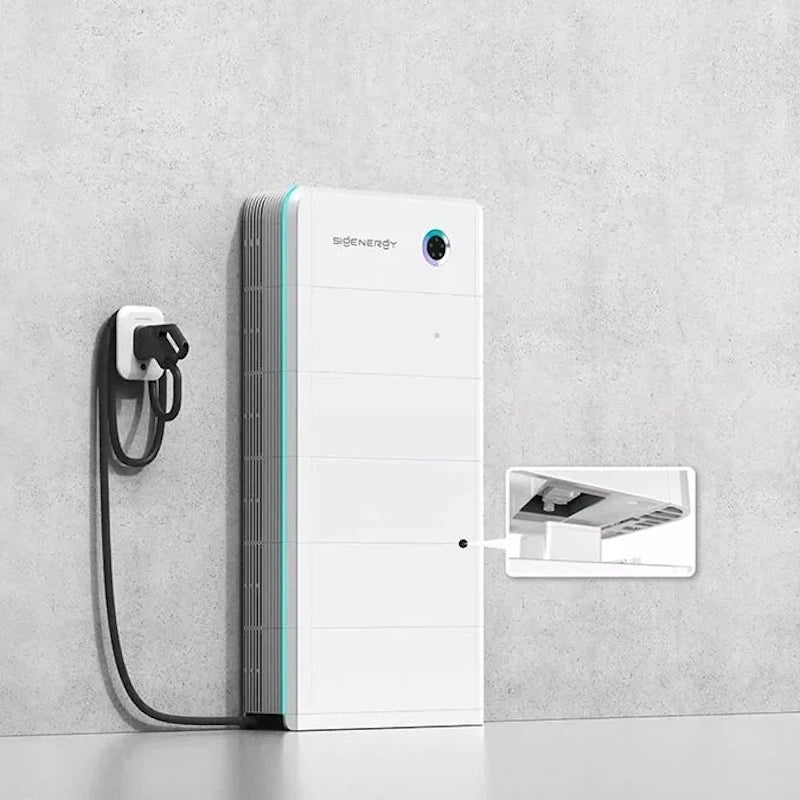
The EVDC module slots into the stack and charges a CCS2 car at 12 or 25 kW straight from the DC bus, with Vehicle-to-Home and Vehicle-to-Grid support.
Built for UK weather
Controllers and batteries are IP66, rated from −20 °C, so the stack can go in a garage, plant room or on an outside wall.
Why the LFP chemistry matters
SigenStor batteries use lithium iron phosphate (LiFePO₄) cells, which are far more thermally stable than the NMC chemistry still used in some home batteries. Each module adds Sigenergy's five safety layers: cell-level temperature sensing, an internal fire-suppression unit, high-temperature insulation, aerogel pads between cells and a decompression valve.
Up to 10,000 cycles
Rated at 25 °C and 0.5C — comfortably more than one full cycle a day for decades.
70% capacity guaranteed at year 10
The 10-year warranty includes a written capacity-retention floor, not just a defects promise.
97% usable depth
A BAT 8.0 delivers 7.8 kWh of its 8.06 kWh, with 4 kW continuous and 6 kW peak power per module.
Mix and match modules
BAT 5.0, 6.0 and 8.0 modules can share a stack because each has its own optimiser.
How much storage do you need?
Most UK homes start with one or two modules and add more when they fit a heat pump or buy an EV. This is how capacity builds up on the EC 6.0 SP using BAT 8.0 modules:
| Modules | Total capacity | Usable | Max discharge | Typical fit |
|---|---|---|---|---|
| 1 | 8.06 kWh | 7.8 kWh | 4 kW | 2–3 bed home, evening use |
| 2 | 16.12 kWh | 15.6 kWh | 8 kW | Family home on a time-of-use tariff |
| 3 | 24.18 kWh | 23.4 kWh | 12 kW | Home with a heat pump |
| 4 | 32.24 kWh | 31.2 kWh | 16 kW | Heat pump plus EV |
| 6 | 48.36 kWh | 46.8 kWh | 24 kW | Large home or near off-grid |
Swipe the table to see all columns.
Planning tip: the EVDC charging module takes one slot in the stack, so a controller with the EV charger fitted holds a maximum of five battery modules. For bigger sites, up to 10 controllers can run in parallel.
The DC EV charger: the part no one else offers
Every ordinary home wallbox is an AC charger. The car's own on-board converter turns that AC back into DC, which caps speed (usually 7.4 kW on single phase) and wastes energy in the double conversion.
The SigenStor EV DC Charging Module connects at the DC bus, before the inverter. Solar goes into the car without being converted to AC first, and the module can draw from solar, battery and grid at the same time — so even the 12 kW version beats a 7.4 kW wallbox regardless of the weather. The 25 kW version is roughly three times faster.

| Specification | 12 kW model | 25 kW model |
|---|---|---|
| Max charge / discharge power | 12.5 kW | 25 kW |
| Max current | 40 A | 80 A |
| DC voltage range | 150–1000 V | 150–1000 V |
| Connector | CCS2 | CCS2 |
| Cable lengths | 7.5 m or 10 m | 5 m, 7.5 m or 10 m |
| Bidirectional | V2H and V2G | V2H and V2G |
| Protection | IP66 | IP66 |
| Charging modes | Fast (solar + battery + grid), PV surplus only, Battery boost | |
Check your car first: V2H and V2G only work if the vehicle supports bidirectional DC charging, and support can depend on model year and software. Use Sigenergy's V2X compatibility checker before planning around it.
The mySigen app does the tariff maths for you
The hardware is only half of it. The app watches solar, battery, house load, grid and EV in real time (updating every 10 seconds) and schedules the system around your tariff without you touching it.
Smart tariff scheduling
Charges in cheap windows on Octopus Agile, Go or Economy 7, discharges at peak, and lets you enter fixed rates manually.
Full energy picture
Generation, state of charge, import, export, household use and EV charging in one dashboard, with SEG export tracking.
Over-the-air updates
New features arrive as software updates, and installers can run remote diagnostics through Sigen Cloud.
Works without Wi-Fi
The optional Sigen CommMod adds 4G connectivity for garages, outbuildings or homes with patchy broadband.

Staying on in a power cut: the Sigen Energy Gateway
On its own, a SigenStor saves money but shuts down when the grid fails — that is a legal anti-islanding requirement under G98/G100. The Sigen Energy Gateway HomePro SP-F is what lets the house disconnect safely and keep running on battery and solar.

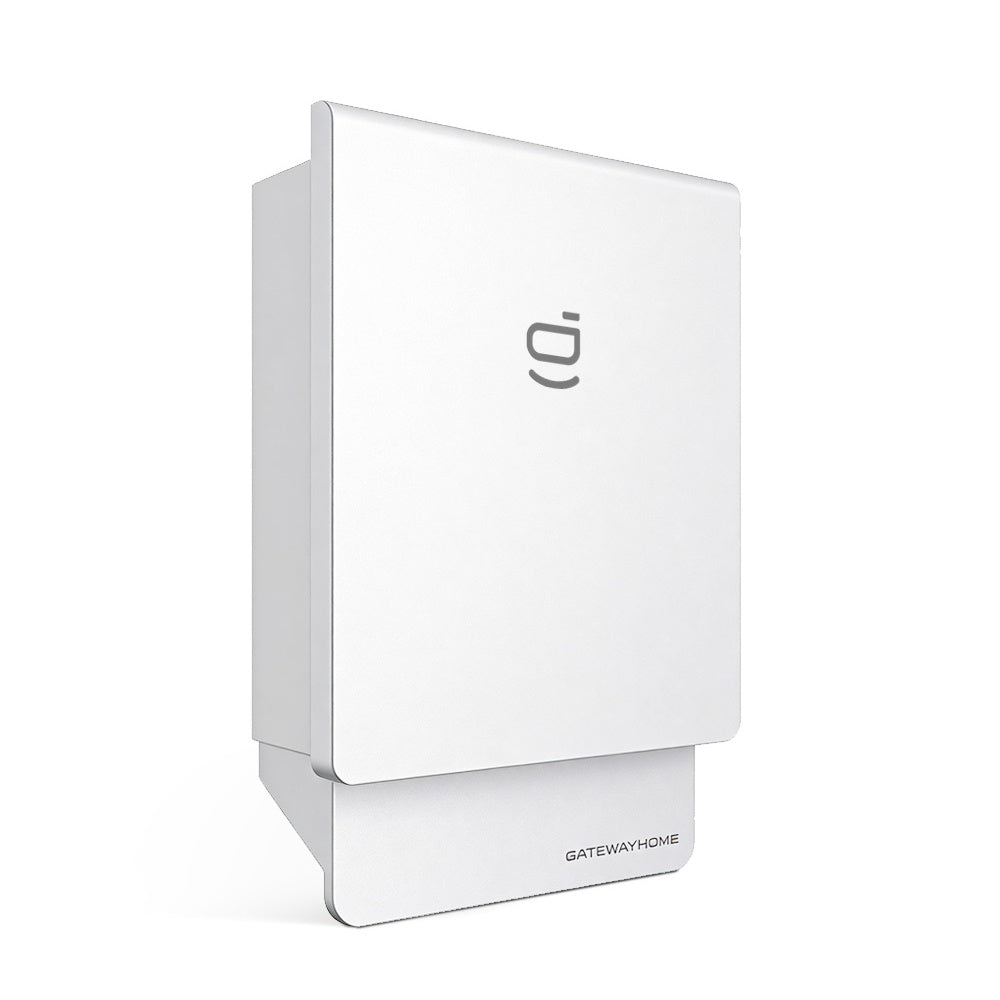
0 ms switchover
Routers, alarms, NAS drives and medical equipment carry on without a flicker.
True whole-home, 100 A
Rated for 22 kW continuous, so you don't need a separate critical-loads board.
Solar keeps charging
Panels keep generating and topping up the battery during an outage — most grid-tied systems simply stop.
Generator and smart loads
A Smart Port supports a generator with 2-wire auto-start, or controls loads like a heat pump by battery level.
For three-phase homes or two-stack installs, the Gateway C60-2 (three phase, 60 kW) does the same job; the Gateway C120-6 covers up to six SigenStor units.
SigenStor vs a conventional separate-box setup
The fairest comparison isn't brand against brand — it's one integrated stack against the usual mix of inverter, battery, AC wallbox and hub.
| Feature | SigenStor | Typical separate system |
|---|---|---|
| Boxes on the wall | One stack (plus Gateway for backup) | Inverter, battery, wallbox, hub |
| EV charging | ✔ 12 or 25 kW DC from the DC bus | 7.4 kW AC on single phase |
| Vehicle-to-Home / Grid | ✔ With EVDC and a compatible car | ✗ Rarely available |
| Adding capacity later | ✔ Stack another module, mix sizes | Often limited to matching packs |
| Backup switchover | 0 ms with Gateway | Varies; often a short drop-out |
| Apps to manage | One (mySigen) | Often two to four |
| Install time | Plug-together modules, no external battery wiring | Separate wiring for each unit |
Swipe the table to see all columns.
Watch: how the Sigen Battery is built differently
Sigenergy explains the thinking behind the Sigen Battery: why every module gets its own optimiser, how that makes stacks safer and easier to expand, and what it means for mixing old and new batteries.
Video not playing? Watch on YouTube
Sigenergy products in stock at AIZO
All prices include VAT. Battery storage installed with solar qualifies for 0% VAT under the Energy Saving Materials relief when fitted by an installer. Browse the full range of 49 products in the Sigenergy collection.
SigenStor EC 6.0 kW + BAT 8.0 battery
Ready-to-install pairing of the 6 kW single-phase controller and one 8.06 kWh module. Takes up to 12 kW of solar and expands to 48 kWh.
£4,700 inc. VATSigenStor Battery Module with LED (5–9 kWh)
Stackable LFP module with its own optimiser. Add one to an existing stack at any time to increase storage and discharge power.
From £2,700 inc. VATSigenStor EV DC Charging Module
12 or 25 kW bidirectional DC charging with a CCS2 connector, fitted into the SigenStor stack. Requires an existing SigenStor with at least one battery.
From £1,795 inc. VATSigen Energy Gateway HomePro SP-F 100A
0 ms whole-home backup up to 22 kW, with a bypass circuit, generator auto-start and smart load control. Rear cable entry for a clean install.
£970 inc. VAT| Also in the range | Price inc. VAT |
|---|---|
| SigenStor EC 3.6 kW + 2 × 6.0 kWh (12.04 kWh) | £6,300 |
| SigenStor Energy Controller, single phase 3.6–12 kW | From £1,130 |
| SigenStor Energy Controller, three phase 10–25 kW | From £2,050 |
| Sigen Gateway C60-2, three phase 60 kW | £1,245 |
| Sigen EV AC Charger 7 kW, tethered Type 2 | £697 |
| Sigen Power Sensor, single phase CT 120 A | £110 |
| Sigen CommMod 4G module | £133 |
| SigenStor Ground-Mount Kit | £170 |
Swipe the table to see all columns.
What to pair it with
Solar panels
Because the controller accepts up to 2× its rating in PV, it pays to oversize the array for UK winters. We stock Tier 1 monocrystalline panels including N-type TOPCon modules that do well in diffuse light. Browse solar panels
Air source heat pumps
Charge the battery overnight on a cheap rate and run the heat pump from it through the evening peak. With the Gateway fitted, heating can keep running in a power cut. Browse heat pumps
AC charging for a second car
If the main car uses the DC module, the Sigen EV AC Charger handles a second vehicle with solar-priority charging in the same app. Browse EV chargers
Hot water storage
A heat battery or smart cylinder soaks up surplus solar once the SigenStor is full. See our guide to the Sunamp heat battery.
SigenStor questions we get asked
Do I need the Gateway?
Only if you want backup power. Without it, the SigenStor still stores solar, runs your tariff schedule and exports surplus, but it switches off during a grid outage as G98/G100 rules require.
Why is the BAT 8.0 sometimes called a 9 kWh battery?
It's a naming difference in the Sigenergy range. The BAT 8.0 module has 8.06 kWh nominal and 7.8 kWh usable capacity; some listings round this to "9 kWh". The part number is the reliable reference.
Should I choose the 3.6 kW or 6 kW controller?
The 3.6 kW suits smaller homes and retrofits with up to about 4 kW of panels. The 6 kW suits larger arrays (up to 12 kW of PV), EV charging alongside household use, and gives 9 kW of backup peak power instead of 5.5 kW.
Can I add batteries later?
Yes. Each controller supports one to six modules, which simply stack underneath, and module sizes can be mixed. Remember that an EVDC module uses one of those slots.
Who can install it?
A qualified installer, with MCS certification needed for SEG payments and DNO notification under G98 or G100. We supply to installers and homeowners across the UK and can help your installer specify the system.
Keep reading
Get a SigenStor specified for your home
Tell us your roof, your usage and whether you have an EV or heat pump, and our technical team will put together the right controller, battery and Gateway combination.
AIZO Quality Heating · sales@qualityheating.co.uk · 020 4577 3096