


Solar without storage is half a system. The Livoltek iPower HES1 changes that by combining a single-phase hybrid inverter and an expandable lithium iron phosphate (LFP) battery into one floor- or wall-mounted tower — installed in roughly fifteen minutes, sized to your home, and ready for either a new PV install or a retrofit alongside an existing array.
Two bundles are now available at AIZO Quality Heating: the HES1-3K6S2 (3.68 kW) for G98-friendly single-phase homes and smaller PV arrays, and the HES1-5KS2 (5 kW) for typical UK domestic loads, heat-pump pairings, and EV charger synergy. Both bundles ship with 5.12 kWh of LFP storage as standard and stack up to 25.6 kWh — five battery packs — on the same inverter.
Plug-in modules, no inter-pack wiring, IP66 protection on the inverter, and a sub-35 dB acoustic profile quiet enough to live with in a kitchen or utility cupboard.
How the iPower HES1 moves energy around your home
Solar PV
(up to 12 kW DC)
Hybrid
Inverter
LFP Battery
5.12 - 25.6 kWh
Home Loads
+ Backup
The hybrid inverter handles four directions of flow at once: DC from the solar array, AC to and from the grid, DC to and from the battery stack, and a dedicated backup output that isolates critical circuits during an outage. A CT clamp on the meter tail tells the system how much your house is using in real time, which is what unlocks zero-export, self-consumption priority, and load-balancing with a heat pump or EV charger on the same supply.
A day in the life of the system
-
Sunrise: low-voltage startup
From a 70 V start-up threshold the MPPTs come online earlier than competing inverters that wait for 150 V, generating an extra two to three hours of useful current on grey UK mornings.
-
Midday: charge first, then export
Surplus PV charges the battery stack before any unit is exported to the grid, with the CT meter holding feed-in to whatever level your DNO permits — including zero-export for unmetered installs.
-
Late afternoon: smart load synergy
When excess solar is available, the inverter can divert it to a heat pump or EV charger rather than to the grid, capturing more value from every panel on the roof.
-
Evening peak: discharge to the house
As tariffs climb, the battery feeds household loads. Six configurable time-of-use windows let you tune the schedule against an Octopus Go or Cosy-style import tariff.
-
Outage: under 10 ms switchover
If the grid drops, backed-up circuits transfer to the inverter in under 10 milliseconds — fast enough that a desktop PC, broadband router, or fridge inverter rarely notices.
Four engineering pillars at the centre of the HES1 design
Performance, reliability, intelligent control, and modular expansion — the same chassis ticks all four boxes.
200% PV oversizing & 12 kW DC input
Each inverter accepts up to 12 kW DC from your panels — twice its rated AC output — across two independent 18 A MPPTs. That means you can build a much larger array than the inverter's rated power and still capture the shoulders of the day without clipping.
IP66 chassis, no derating at 45 °C
Dust-tight, water-jet rated, and quoted to deliver full rated output up to 45 °C ambient with a 200% surge for 10 seconds. Battery packs have a built-in low-temperature heating circuit that allows charging in genuine winter conditions.
Six TOU windows, app, web, and CT metering
Six configurable charge/discharge windows across the day, Wi-Fi + Bluetooth commissioning, a web dashboard for installers, and a smartphone app for homeowners. The CT clamp does the heavy lifting on self-consumption logic.
Up to 25.6 kWh, two inverters in parallel
Start with 5.12 kWh, add a pack later, or stack a full five-pack tower for 25.6 kWh on day one. Two HES1 inverters can also be paralleled for 12 kW of output — useful for larger homes or off-grid scenarios.
HES1-3K6S2 vs HES1-5KS2: which bundle is right?
Both bundles share an identical chassis, battery family, and software — the differentiator is the inverter's rated AC output and what that means in practice for your incoming supply, your PV array size, and how much current you can pull during a backup event.
| Specification | HES1-3K6S2 (3.68 kW) | HES1-5KS2 (5 kW) |
|---|---|---|
| Nominal AC output | 3.68 kW | 5 kW |
| Max apparent output | 4 kVA | 5.5 kVA |
| Max PV input power | 7.2 kW (200% oversize) | 10 kW (200% oversize) |
| Rated output current @ 230 V | 16 A | 21.7 A |
| Max output current @ 230 V | 17.6 A | 23.9 A |
| Backup peak power (10 s) | 7.36 kW | 10 kW |
| UK grid connection | G98 - 16 A single-phase friendly | G99 - requires DNO application |
| Best suited to | Smaller homes, retrofits, modest PV arrays, lower-load profiles | Typical 3-4 bed homes, heat pump pairings, EV charging, larger arrays |
In short, if your roof can comfortably accept 4-6 kWp of PV, your evening loads sit below 4 kW, and you want a no-fuss G98 connection, the 3.68 kW bundle is enough. If you are planning around a 5-8 kWp array, an EV charger, or a hot-water-priority heat pump that occasionally pulls hard, the 5 kW bundle gives you the headroom — at a modest price difference.
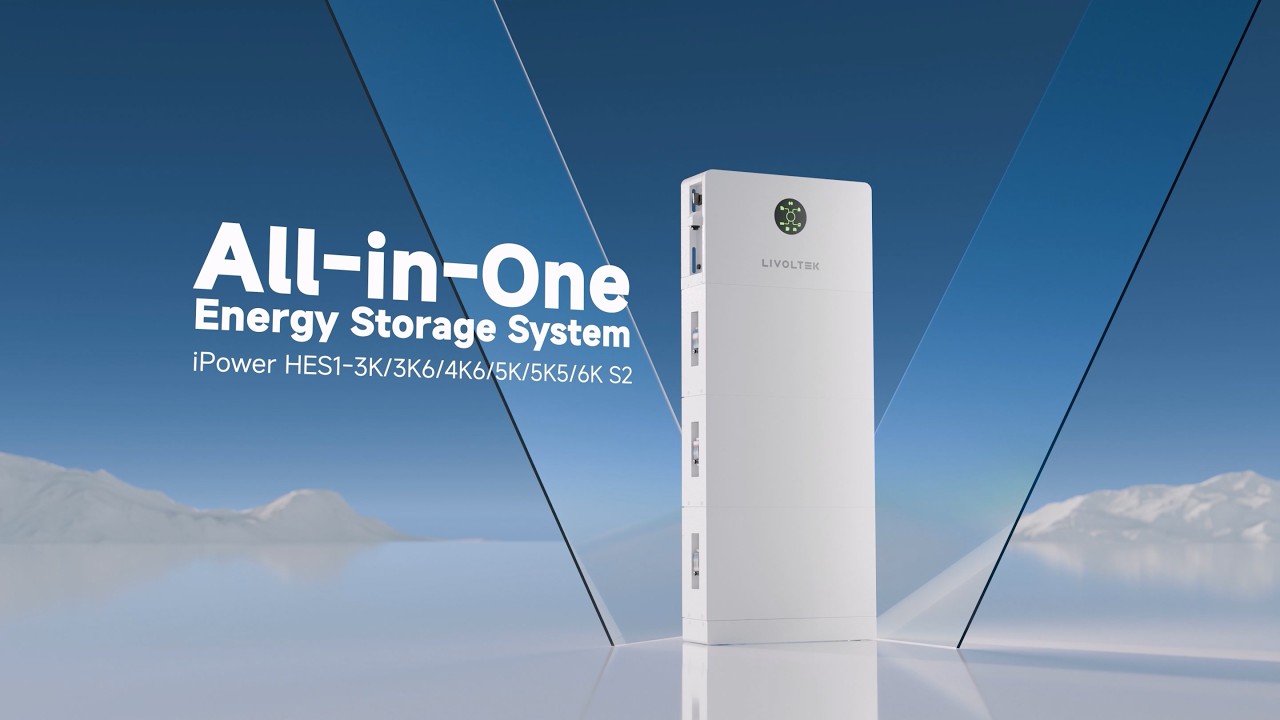
One System, Total Control - iPower HES1 hybrid inverter all-in-one ESS
Livoltek's official 2-minute product walkthrough covering the single-phase HES1 3 to 6 kW range, the LFP battery stack, and the smart load synergy modes.
Watch on YouTubeShop the Livoltek iPower HES1 bundles
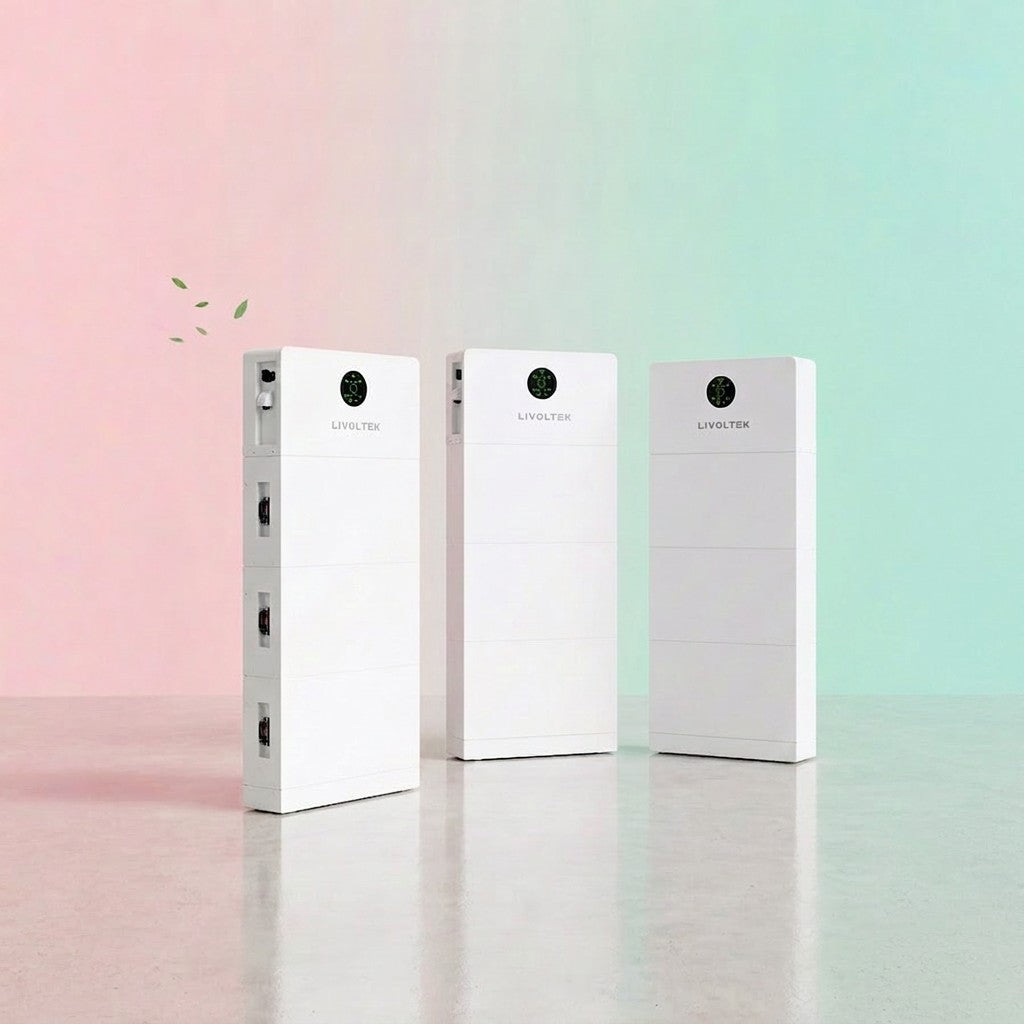
iPower 3.68 kW Hybrid All-in-One ESS Bundle
Single-phase 3.68 kW hybrid inverter with 5.12 kWh of LFP battery as standard, expandable to 25.6 kWh. G98-friendly for fast DNO sign-off on smaller PV arrays.
£2,300.00 from
iPower 5 kW Hybrid All-in-One ESS Bundle
Single-phase 5 kW hybrid inverter with 5.12 kWh of LFP battery as standard, expandable to 25.6 kWh. Ideal for typical UK homes, heat-pump synergy, and EV charging.
£2,400.00 from
Full technical specifications
Both bundles share an identical battery family — the BLF-SR LFP stack — and an identical inverter chassis, with only the AC ratings and PV input ceiling changing between them. Battery packs ship as 5.12 kWh modules with their own BMS, and a built-in low-temperature heating circuit means they can self-warm to 15 °C before charging in cold weather.
| Specification | Detail |
|---|---|
| Inverter topology | Transformerless single-phase hybrid |
| Nominal AC voltage | L/N/PE, 220 / 230 / 240 V |
| AC frequency | 50 Hz / 60 Hz, 45-55 / 55-65 Hz |
| Max PV input voltage | 500 V DC |
| MPPT voltage range | 60-500 V DC |
| Start-up voltage | 70 V DC |
| Number of MPPTs / strings per MPPT | 2 / 1 |
| Max PV current per MPPT | 18 A / 18 A |
| Max short-circuit current per MPPT | 22 A / 22 A |
| Battery chemistry | Lithium iron phosphate (LFP) |
| Battery pack nominal voltage | 51.2 V |
| Battery pack module | 51.2 V, 100 Ah, 5.12 kWh per module |
| Battery operating voltage range | 43.2 - 57.6 V |
| Max charge / discharge current | 125 A (inverter side) |
| Depth of discharge | 90% |
| Cycle life | 6,000 cycles (0.5C, 25 °C, 90% DOD, 70% EOL) |
| Maximum efficiency | 97.6% |
| European weighted efficiency | 96.8% |
| Backup switchover time | < 10 ms |
| Backup peak power | 2 x rated power for 10 seconds |
| Dimensions (W x H x D) - inverter + 1 battery | 680 x 836 x 200 mm (per stack section) |
| Inverter weight | 28 kg |
| Battery pack weight | ~50.5 kg per 5.12 kWh module |
| Ingress protection | IP66 (inverter), IP65 (battery) |
| Cooling | Natural convection (no fan) |
| Acoustic noise | ≤ 35 dB(A) typical |
| Operating temperature | -25 to +60 °C (derating above 45 °C) |
| Ambient humidity | 0-100% non-condensing |
| Operating altitude | Up to 2,000 m |
| Surge protection | Type II (DC), Type II (AC) |
| AFCI | Optional |
| Communication | RS485, CAN, Wi-Fi, Bluetooth |
| Display | LED status ring, mobile app, web portal |
| Mounting | Wall- or floor-mounted |
| Warranty | 5 / 10 years (subject to installation country and policy) |
Why installers and homeowners are choosing the HES1
Cable-free modular stack
Battery packs plug directly into the base unit and into each other - no inter-module communications loom and no manual DC links. Spirit level and adjustable feet are built into the base.
LFP chemistry with active fire prevention
Industrial-grade lithium iron phosphate cells, an active fire prevention module in each battery, and an independent BMS per pack mean a fault in one module is contained, not cascaded.
Fanless, ≤35 dB(A) typical
Quieter than a domestic fridge (about 48 dB) and well below normal conversation (around 60 dB). Fanless natural-convection cooling means there's nothing to clog, service, or replace.
Six time-of-use windows, ECO mode, smart CT
Tune charge and discharge across six daily windows, switch to ECO for self-consumption priority, and use the CT clamp for zero-export, peak-shaving, or full feed-in compliance.
Same-version mixed-lot packs supported
Add capacity later without buying a matched-lot battery. Provided the SOC of every pack is brought to 100% before commissioning, packs from different production runs can sit on the same stack.
Heat pump and EV charger control
Surplus PV can be diverted to a heat pump or to a compatible AC EV charger before exporting. Especially valuable on the falling export tariffs now common across the UK SEG market.
Where the HES1 fits best
Designed for single-phase residential and light commercial sites
At-a-glance compatibility
Frequently asked questions
What's actually in the box for a "bundle"?
Each bundle ships with the HES1 hybrid inverter, the battery base unit, and one or more 5.12 kWh BLF-SR battery modules - the quantity depends on the SKU you select. The base unit handles the inverter-to-battery DC connection and includes the spirit level and adjustable feet. Bundles with four or more battery modules ship with a junction box and combiner box as well, because the stack splits into two side-by-side towers above three packs.
Will it run my whole house in a power cut?
The HES1 has a dedicated backup output that powers a sub-circuit board of "essential" loads when the grid drops - typically lighting, sockets, fridge/freezer, broadband, and a heating control circuit. On the 5 kW model that backup output can deliver up to 5 kW continuously and 10 kW for 10-second surges, which is enough for a typical evening profile. Whether it powers the entire house depends on what total simultaneous load you put on it and how the consumer unit is wired during installation.
Do I need DNO permission to install one in the UK?
The 3.68 kW HES1-3K6S2 falls under G98 - a "fit and notify" connection that doesn't require pre-approval from the DNO, you simply notify them within 28 days of commissioning. The 5 kW HES1-5KS2 sits above the G98 threshold and requires a G99 application before installation. Your MCS-accredited installer will handle the paperwork either way.
Can I add more batteries later, or do I have to buy a full stack now?
Yes - the modular design is the whole point. You can start with the entry 5.12 kWh bundle and add identical 5.12 kWh modules at any point, up to a maximum of five packs (25.6 kWh) per inverter. Livoltek even supports adding packs from a different production lot, provided every pack is brought to 100% state of charge before they are commissioned together.
Is it suitable for a retrofit on an existing solar array?
Yes. The HES1 is a true hybrid - DC-coupled to your panels but also able to charge from the grid - so it can replace an existing string inverter and slot a battery stack in behind it, or sit AC-coupled to an existing micro-inverter system if you prefer. For AC-coupled retrofits the existing inverter handles PV, and the HES1 simply manages battery charging from the grid or from excess solar via the CT meter.
How does it work with a heat pump or EV charger?
The "smart load synergy" features in the firmware are designed exactly for this. With a compatible heat pump connected via dry contact, the inverter can divert surplus PV to the heat pump's domestic hot water cycle rather than exporting it. With an EV charger sharing the same CT clamp, the inverter will preferentially feed the car from solar before pulling from the grid. Both modes are configurable in the app and can be scheduled around tariff windows.
Will it be noisy in my kitchen or utility cupboard?
No. The inverter is fanless and passively cooled, with a typical operating noise of about 35 dB(A) - quieter than a domestic refrigerator (around 48 dB), and well below normal conversation. There's no audible whine, no thermal cycling sound, and no scheduled fan-cleaning maintenance.
What's the warranty?
Livoltek's standard policy is 5 years on the inverter with an extension to 10 years available depending on the final installation site, and 10 years on the LFP battery with a separate end-of-life capacity guarantee. Always confirm the current warranty terms with the AIZO team before purchase, as policies are periodically updated.
Can I put two HES1 inverters in parallel for a bigger system?
Yes - two HES1 inverters can be paralleled for up to 12 kW of combined output and up to 70 kWh of combined storage, useful for larger homes or off-grid scenarios. Note that the parallel operation feature is rolling out gradually via firmware, so confirm availability with AIZO before specifying a parallel installation.
Ready to specify a Livoltek HES1 for your project?
Whether you're a homeowner planning a new solar install or an MCS installer sizing a battery retrofit, the AIZO team can advise on inverter sizing, battery capacity, and bundle pricing.